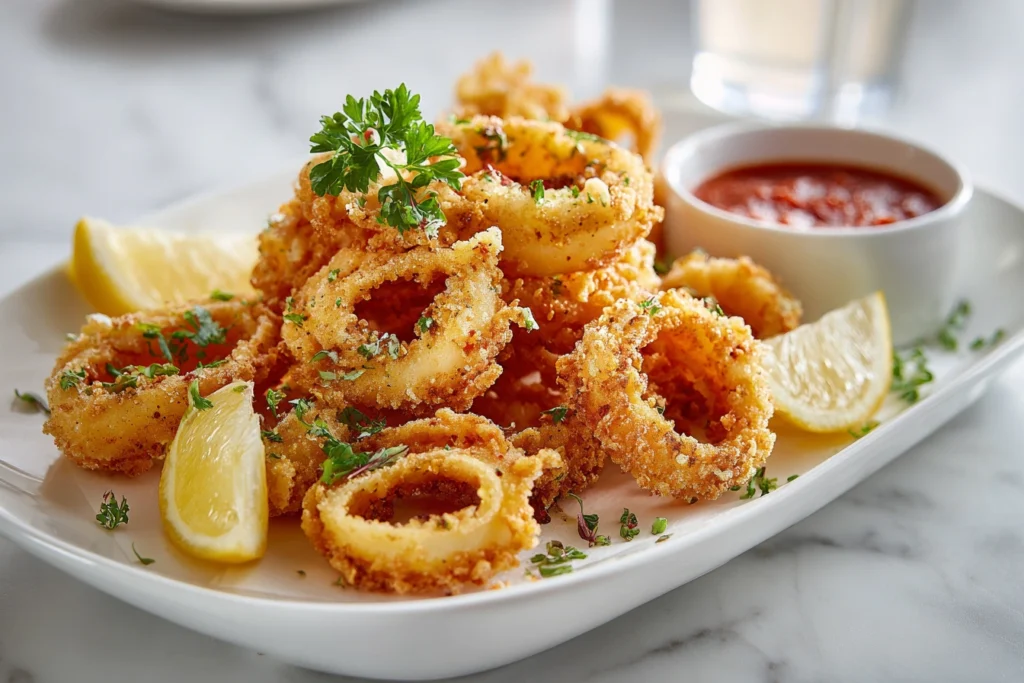
Golden, crisp, and irresistibly tender, fried calamari is one of the most beloved seafood appetizers in the world. Served in coastal Mediterranean towns, Italian trattorias, and modern seafood restaurants alike, this dish has earned its reputation for being both simple and sophisticated. While many people enjoy ordering it at restaurants, few realize how achievable perfect fried calamari truly is at home.
The secret lies in understanding the nature of squid, mastering a light coating, and frying at the correct temperature. When done properly, fried calamari should be airy and delicate, never greasy or rubbery. In this guide, you’ll learn exactly how to prepare squid, how to create a crisp coating, and how to fry it so the result rivals any professional kitchen.
Understanding Calamari
Calamari is simply the culinary name for squid. It has a mild, slightly sweet flavor and a firm texture that transforms beautifully when cooked properly. Squid can be grilled, braised, stuffed, or sautéed, but frying remains the most popular preparation because it highlights both texture and flavor.
The key to excellent fried calamari is speed. Squid must be cooked either very quickly or very slowly. In this recipe, high heat and short cooking time keep the interior tender while the exterior turns golden and crisp.
Why This Method Works
Many home cooks struggle with fried calamari because of three common mistakes: skipping the tenderizing step, overcrowding the fryer, or cooking too long. This method avoids those problems by focusing on:
- A short soak to improve texture
- A balanced flour and starch coating
- Careful oil temperature control
When these three elements come together, the result is consistently crisp and tender every time.
Ingredients You’ll Need
For the Calamari
- 1½ pounds cleaned squid tubes and tentacles
- ½ cup milk or buttermilk
- 1 teaspoon kosher salt
For the Coating
- 1½ cups all-purpose flour
- ⅓ cup cornstarch
- ½ teaspoon baking powder
- ¾ teaspoon dried oregano
- ½ teaspoon black pepper
- ½ teaspoon paprika or cayenne (optional)
- 1 teaspoon salt
For Frying
- Neutral oil (vegetable, canola, or grapeseed)
For Serving
- Lemon wedges
- Fresh parsley
- Marinara sauce or garlic aioli
Step 1: Preparing the Squid
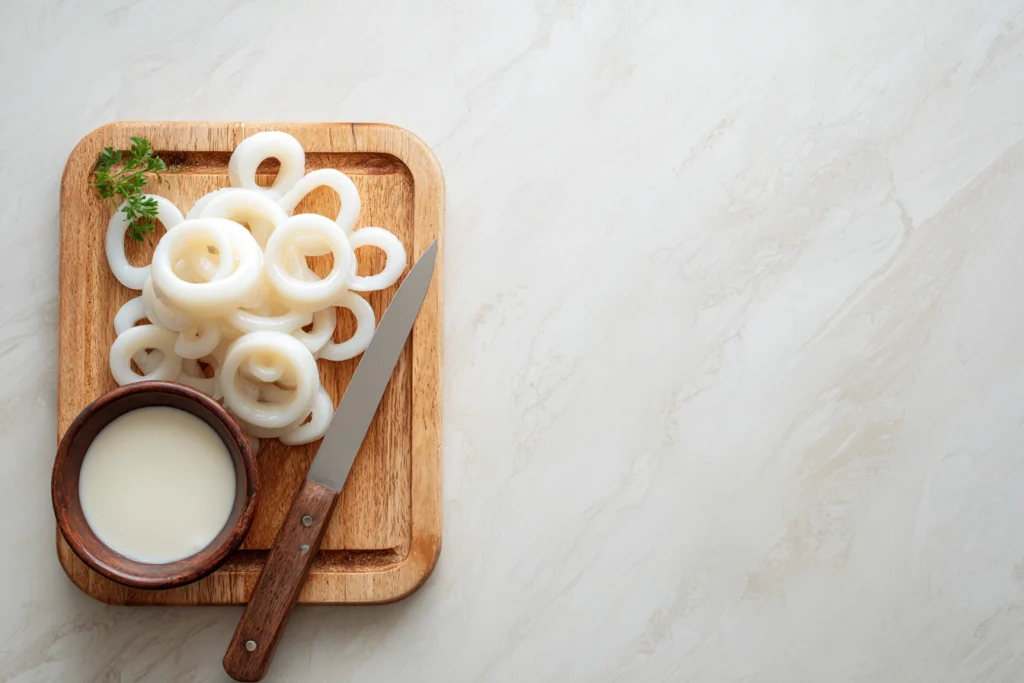
If using whole squid, remove the internal cartilage and rinse thoroughly under cold water. Pat dry with paper towels. Slice the tubes into rings about ¾ inch thick. Avoid slicing them too thinly, as thinner rings can become chewy during frying.
Tentacles should be left whole. They add texture and visual appeal to the finished platter of fried calamari.
Step 2: Tenderizing for Better Texture
Place the sliced squid into a bowl. Mix the salt into the milk or buttermilk and pour it over the squid. Refrigerate for 30 minutes.
This brief soak helps tenderize the meat and ensures the flour coating adheres properly. It is a simple step that dramatically improves the final texture of fried calamari.
After soaking, drain the squid and gently shake off excess liquid. There is no need to rinse.
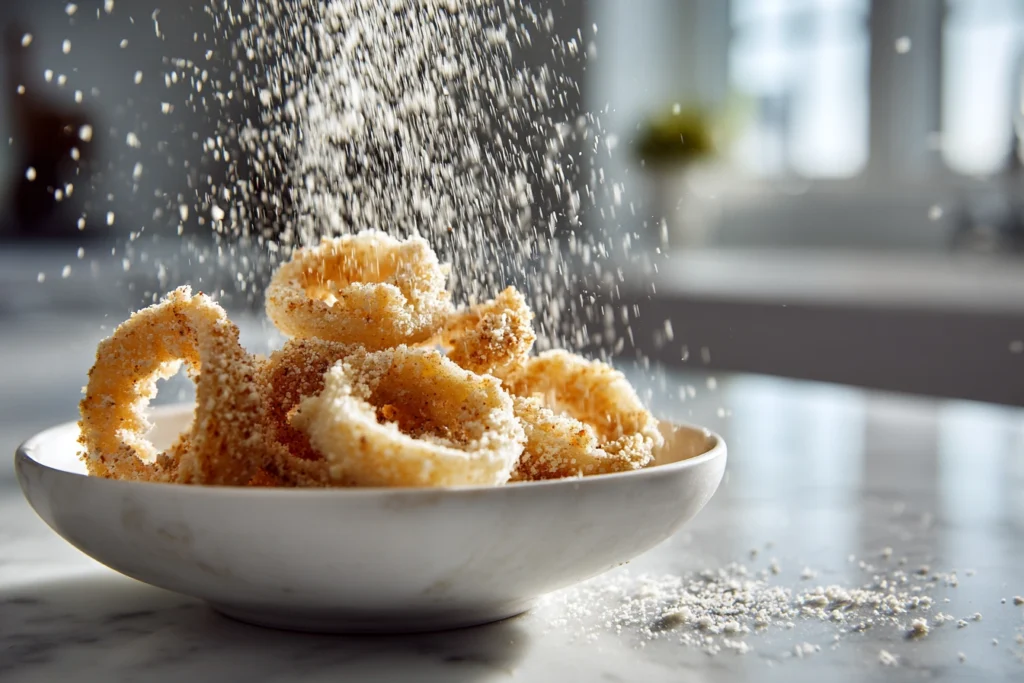
Step 3: Mixing the Coating
In a large bowl, whisk together flour, cornstarch, baking powder, oregano, black pepper, paprika, and salt.
This combination creates a light and crisp crust. Cornstarch reduces gluten formation, preventing the coating from becoming heavy. Baking powder introduces tiny air pockets that enhance crispness.
A well-balanced coating is essential for achieving restaurant-quality fried calamari.
Step 4: Heating the Oil
Pour about 2 to 3 inches of oil into a deep pot or heavy skillet. Heat the oil to 350–365°F (175–185°C).
Temperature control is critical. If the oil is too cool, the coating absorbs oil and becomes greasy. If it is too hot, the outside browns before the squid cooks properly.
Maintaining steady heat ensures evenly cooked fried calamari with a delicate crunch.
Step 5: Dredging the Squid
Working in small batches, toss the soaked squid into the flour mixture. Coat thoroughly, then shake off excess flour. Too much coating can cause uneven browning.
Proper dredging creates the signature light texture that defines excellent fried calamari.
Step 6: Frying to Golden Perfection
Carefully lower a small batch of coated squid into the hot oil. Do not overcrowd the pan. Fry for 2 to 3 minutes, until lightly golden.
The squid should float and turn crisp quickly. Use a slotted spoon to transfer to a wire rack or paper towel-lined plate. Immediately sprinkle with a small pinch of salt.
Repeat with remaining batches, allowing the oil to return to temperature between each round. When cooked properly, fried calamari should be crisp outside and tender inside.
How to Avoid Chewy Texture
Overcooking is the main cause of rubbery squid. Remember this rule:
Quick cooking at high heat keeps calamari tender.
Never exceed four minutes of frying. Properly prepared fried calamari should be easy to bite through without resistance.
Serving Suggestions
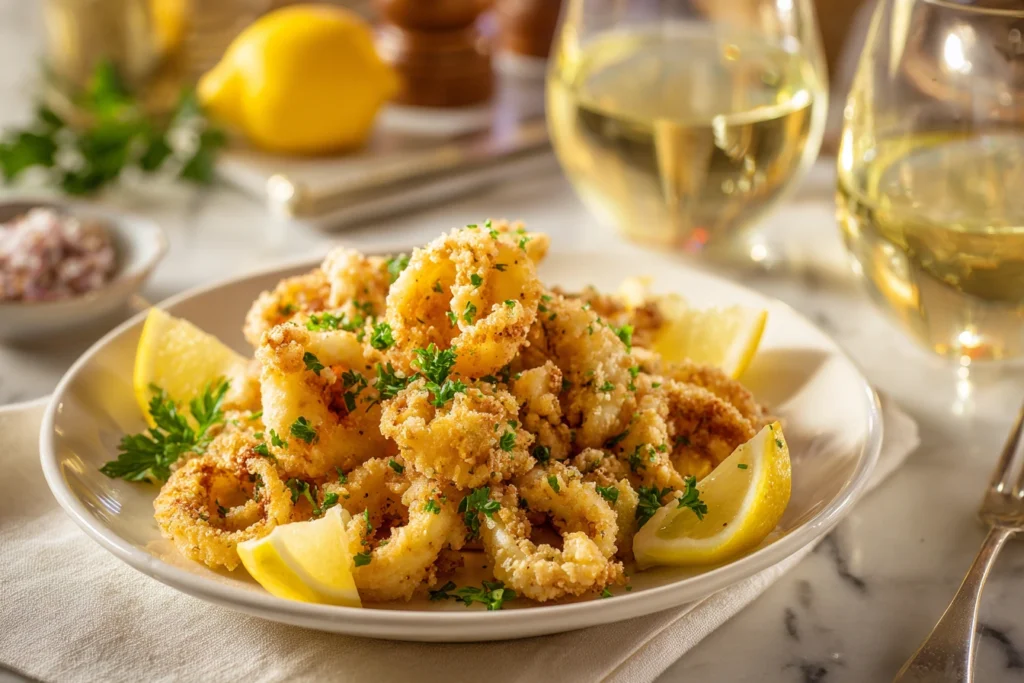
Serve immediately while hot and crisp. Garnish generously with lemon wedges and chopped parsley. A squeeze of fresh lemon brightens the flavor and balances the richness.
Classic accompaniments include marinara sauce, garlic aioli, or a light yogurt-based dip. When served fresh, fried calamari makes an elegant appetizer or a satisfying main dish paired with salad or roasted vegetables.
Flavor Variations
Once you master the basic method, you can experiment with subtle flavor adjustments:
Mediterranean Herb
Add lemon zest and extra oregano to the flour mixture.
Lightly Spiced
Increase cayenne slightly and serve with chili sauce.
Garlic and Herb
Incorporate garlic powder and dried thyme for aromatic depth.
Each variation keeps the integrity of fried calamari while adding personality.
Can You Make It Ahead?
This dish is best enjoyed immediately after frying. However, you can prepare components ahead of time:
- Clean and slice the squid in advance
- Mix the flour coating earlier in the day
If needed, reheat briefly in a 400°F oven for 5–7 minutes. While reheated fried calamari will still be enjoyable, nothing compares to serving it straight from the fryer.
Nutritional Notes
Squid is naturally high in protein and relatively low in fat. The frying process adds richness, so moderation is key. To lighten the dish:
- Use minimal coating
- Drain thoroughly
- Serve with lemon instead of heavy sauces
When prepared carefully, fried calamari can be part of a balanced meal.
Why This Dish Remains a Favorite
The appeal of fried calamari lies in contrast. The exterior is crisp and airy, while the interior remains tender and mildly sweet. Its neutral flavor pairs well with a wide range of sauces and side dishes.
Whether served at a dinner party or a casual gathering, fried calamari always feels special. It delivers restaurant-quality flavor with surprisingly simple ingredients.
Final Thoughts
Making perfect fried calamari at home is entirely achievable with the right approach. By soaking the squid briefly, using a light flour and starch coating, and frying at a steady temperature, you can create a crisp and tender dish every time.
Once you master this method, you may find yourself preparing fried calamari more often than ordering it out. The freshness, texture, and flavor are simply unmatched when made at home.
This guide draws inspiration from trusted culinary sources such as The Mediterranean Dish, whose detailed approach to classic seafood recipes helped shape the foundation of this article.

Sarah is the recipe creator behind Diamond Meals. She shares easy homemade recipes made with simple ingredients, clear instructions, and practical cooking tips. Her goal is to help home cooks prepare delicious meals, desserts, drinks, and appetizers with confidence.