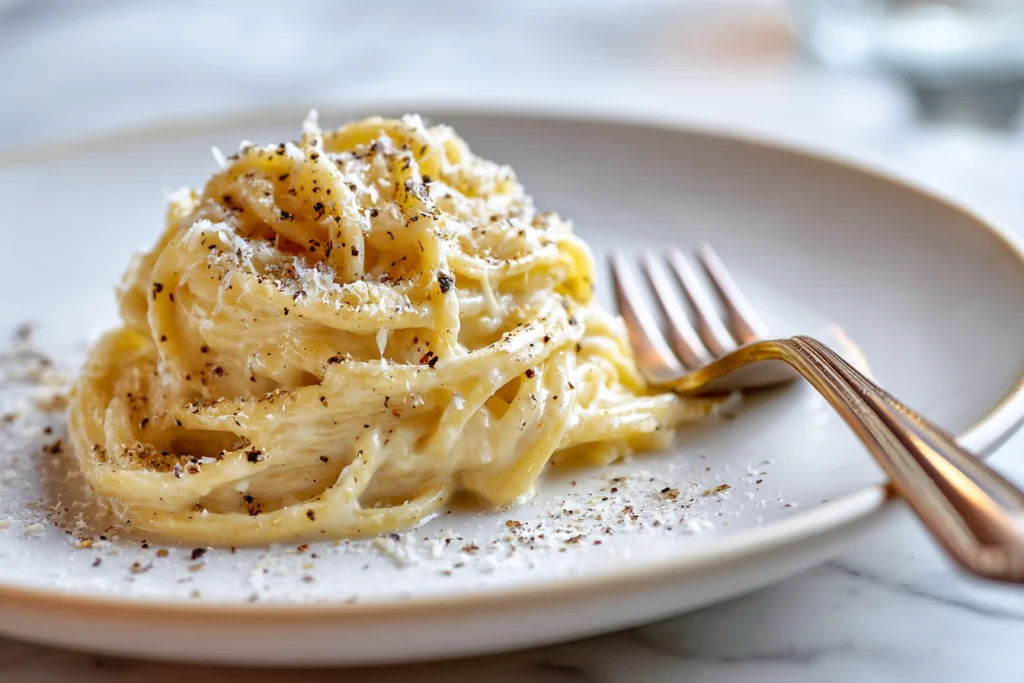
Cacio e Pepe recipe lovers know that this classic Roman pasta dish is proof that simple ingredients can create extraordinary flavor. Made with just pasta, Pecorino Romano cheese, and freshly ground black pepper, this traditional Italian recipe delivers a creamy, rich sauce without using cream or butter. When prepared with the right technique, the combination of starchy pasta water and finely grated cheese creates the signature silky texture that makes this dish so beloved around the world.
In this Cacio e Pepe guide, you will learn how to prepare an authentic version of this iconic Italian pasta, including its history, the best ingredients to use, detailed cooking instructions, and expert tips that guarantee perfect results every time.
What Is Cacio e Pepe?
The name translates directly from Italian as “cheese and pepper.” These two ingredients, combined with pasta and cooking water, create the signature sauce that defines the dish.
Unlike many creamy pasta recipes, this one does not rely on butter or cream. Instead, its smooth texture comes from a natural emulsion created by mixing finely grated Pecorino Romano with starchy pasta water.
The pasta most commonly used includes long shapes such as spaghetti, bucatini, or tonnarelli. These shapes allow the sauce to cling evenly, ensuring every bite is coated with the peppery, cheesy mixture.
Although the ingredients are simple, preparing the dish correctly requires attention to temperature and technique. The cheese must melt smoothly without clumping, and the pasta water must contain enough starch to create a silky sauce.
The Origins of This Roman Cacio e Pepe Pasta
This recipe comes from the Lazio region of Italy and has been enjoyed for centuries. Historically, it was a practical meal for shepherds traveling across the countryside.
Shepherds needed ingredients that were durable, nutritious, and easy to transport. Three foods met those needs perfectly:
- Dried pasta
- Aged Pecorino Romano cheese
- Black pepper
Pecorino Romano was especially useful because it keeps well for long periods without refrigeration. Black pepper added warmth and strong flavor, while pasta provided energy during long journeys.
Over time, this humble meal evolved into one of the most celebrated pasta dishes in Italian cuisine. Today, it appears on restaurant menus around the world.
Why This Cacio e Pepe Recipe Is So Popular
There are many reasons this Roman classic Cacio e Pepe continues to captivate cooks and diners alike.
Simplicity
The recipe uses very few ingredients, making it easy to prepare at home.
Bold Flavor
Pecorino Romano provides a sharp, salty taste that pairs beautifully with aromatic black pepper.
Creamy Texture
The sauce becomes naturally creamy without heavy ingredients.
Quick Preparation
The entire dish can be prepared in about twenty minutes.
These characteristics make it perfect for both weeknight dinners and elegant meals.
Ingredients Of Cacio e Pepe
This recipe serves four people.
Main Ingredients
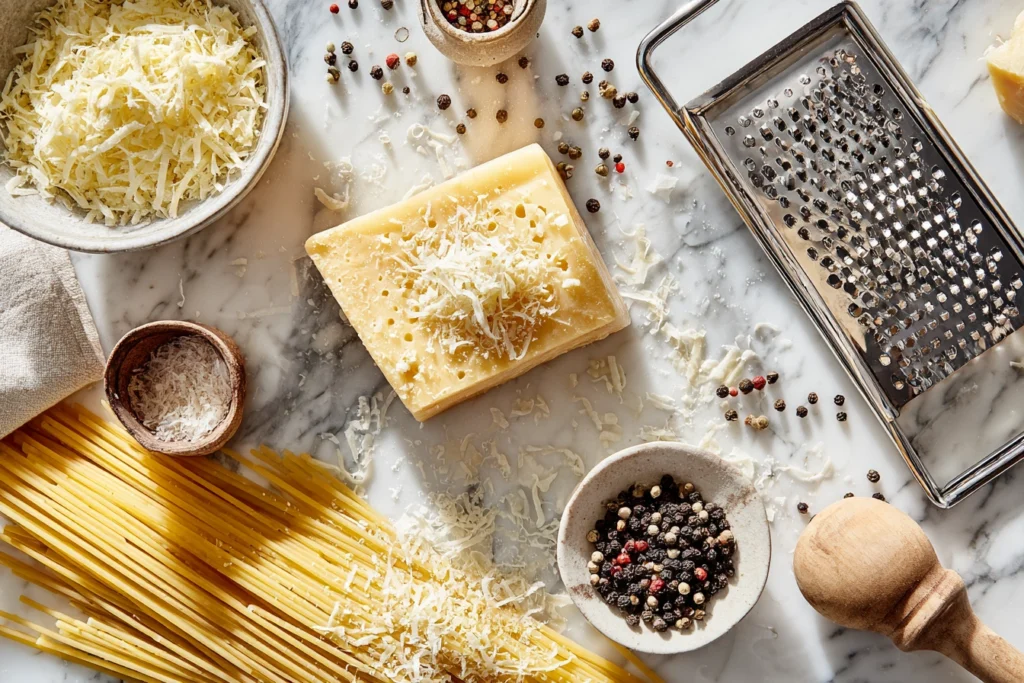
- 400 g spaghetti or tonnarelli
- 200 g finely grated Pecorino Romano cheese
- 2 teaspoons freshly ground black pepper
- Salt for pasta water
Because the recipe contains so few ingredients, quality is extremely important.
Selecting the Best Ingredients To Make Cacio e Pepe
Pasta
Long pasta shapes work best because they allow the sauce to coat evenly.
Recommended choices include:
- Spaghetti
- Bucatini
- Tonnarelli
Pecorino Romano
This traditional sheep’s milk cheese is essential for authentic flavor. It is saltier and sharper than Parmesan, giving the dish its characteristic taste.
Always grate the cheese finely for the smoothest sauce.
Black Pepper
Freshly ground pepper releases aromatic oils that enhance the flavor of the sauce. Whole peppercorns ground just before cooking produce the best result.
Step-by-Step Cooking The Cacio e Pepe
1. Bring Water to a Boil
Fill a large pot with water and bring it to a boil. Add salt once the water begins bubbling.
Because Pecorino Romano already contains salt, avoid over-salting the water.
2. Cook the Pasta
Add the pasta and cook until al dente, according to the package instructions.
Before draining, reserve about 1½ cups of pasta cooking water. This starchy liquid is essential for the sauce.
3. Toast the Pepper
While the pasta cooks, place a large skillet over medium heat.
Add the freshly ground pepper and toast it briefly until fragrant. This step enhances the pepper’s flavor.
4. Add Pasta Water
Pour about half a cup of the reserved pasta water into the skillet with the pepper.
Allow the mixture to simmer gently so the pepper flavor infuses the liquid.
5. Transfer the Pasta
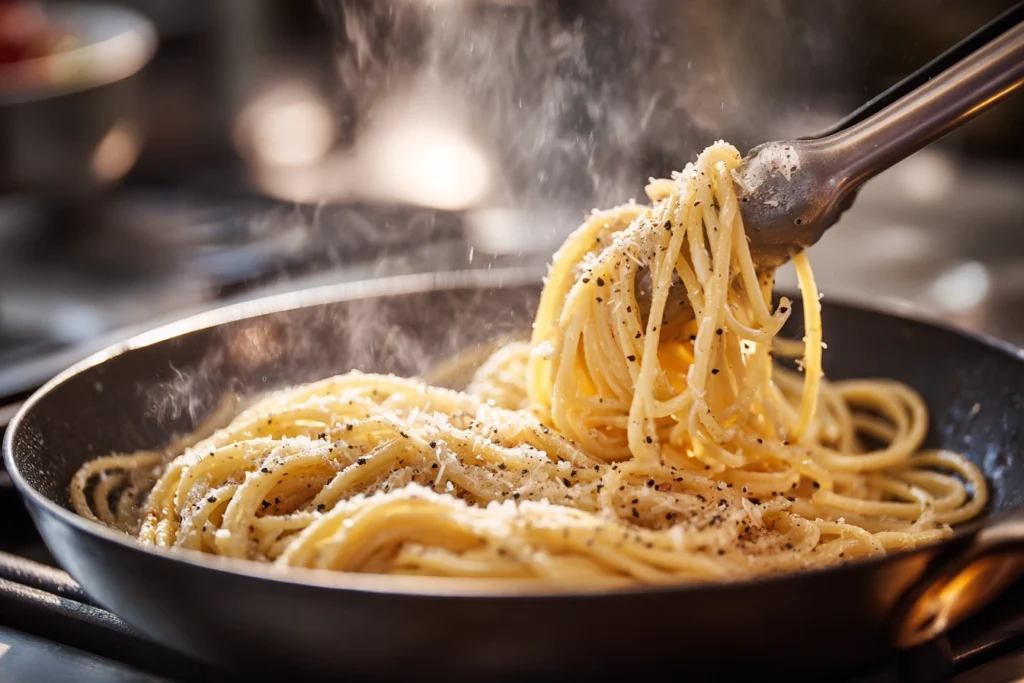
Using tongs, transfer the cooked pasta directly from the pot into the skillet.
Toss the noodles so they absorb the pepper-infused water.
6. Add the Cheese
Remove the pan from the heat.
Gradually sprinkle the grated Pecorino Romano over the pasta while tossing continuously. Add small amounts of pasta water if necessary.
7. Create the Creamy Sauce
Continue tossing the pasta until the cheese melts completely and forms a smooth sauce that coats the noodles evenly.
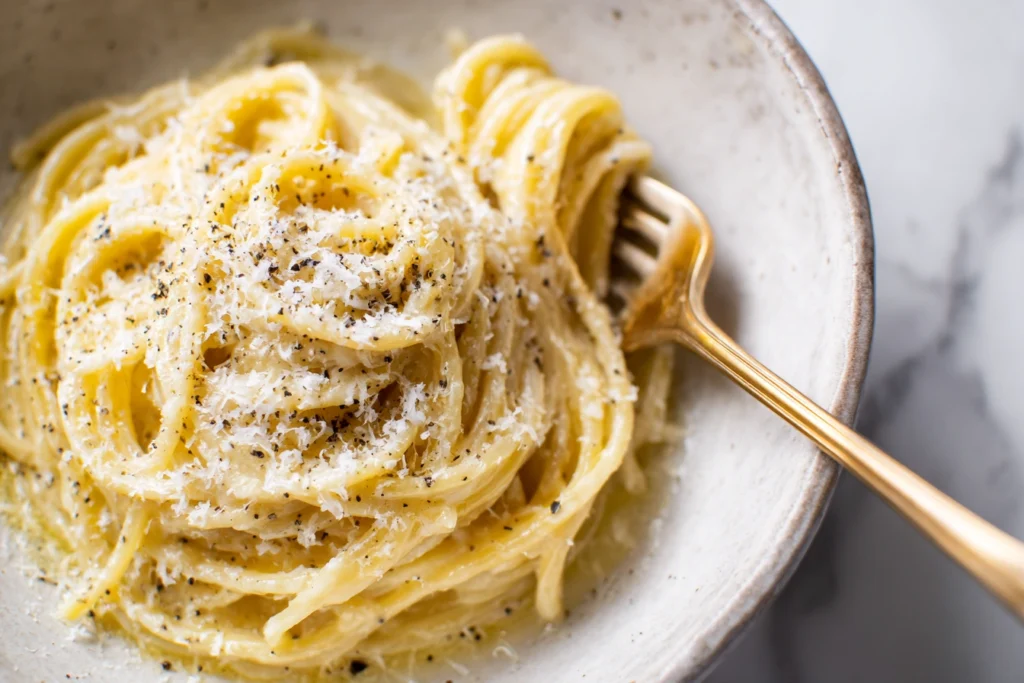
The texture should appear glossy and creamy.
8. Serve Immediately
Transfer the pasta to serving plates.
Finish with additional Pecorino Romano and freshly cracked black pepper for extra flavor.
Expert Tips for Success
Finely Grate the Cheese
Small cheese particles melt faster and blend more smoothly with pasta water.
Control the Heat
Too much heat can cause the cheese to clump instead of forming a creamy sauce.
Use Enough Pasta Water
The starch in the water is essential for emulsifying the sauce.
Toss Continuously
Constant movement helps the cheese and water combine properly.
Common Mistakes to Avoid
Using Pre-Grated Cheese
Pre-grated cheese often contains additives that prevent smooth melting.
Skipping the Pepper Toasting Step
Toasting the pepper intensifies its aroma and flavor.
Not Saving Pasta Water
Without the starchy water, the sauce cannot form correctly.
Possible Variations Of Cacio e Pepe
Although traditionalists prefer the original three-ingredient version, some modern cooks experiment with small additions.
Butter
A small amount of butter can help stabilize the sauce.
Parmesan Blend
Some recipes mix Parmesan with Pecorino for a milder taste.
Olive Oil
A drizzle of olive oil can add richness.
Despite these variations, the classic preparation remains the most authentic.
What to Serve With Cacio e Pepe
This Roman pasta is often served as a first course in Italian meals.
It pairs well with light dishes that balance its richness.
Good options include:
- Fresh green salad
- Roasted vegetables
- Grilled chicken
- Garlic bread
A crisp white wine can also complement the peppery flavors.
Storing and Reheating
This pasta is best enjoyed immediately after cooking.
Refrigeration
Leftovers can be stored in the refrigerator for up to two days.
Reheating
Reheat gently in a skillet with a small amount of water while stirring continuously.
This helps restore the creamy texture.
Frequently Asked Questions About Cacio e Pepe
Why does the sauce sometimes clump?
The cheese may have been added while the pan was too hot.
Can another cheese be used?
Parmesan can be substituted, though the flavor will be milder.
What pasta works best?
Long pasta shapes such as spaghetti or bucatini are ideal.
Final Thoughts About Cacio e Pepe
This classic Roman Cacio e Pepe pasta demonstrates how a few high-quality ingredients can create a remarkable dish. When the cheese melts smoothly with starchy pasta water and aromatic black pepper, the result is a creamy, flavorful meal that feels both comforting and sophisticated.
Mastering the technique may take a little practice, but once you learn the balance of heat, cheese, and pasta water, you will be able to recreate this Italian favorite whenever the craving strikes.
“This article was thoughtfully inspired by insights shared in this helpful guide: https://www.themediterraneandish.com/cacio-e-pepe/.”