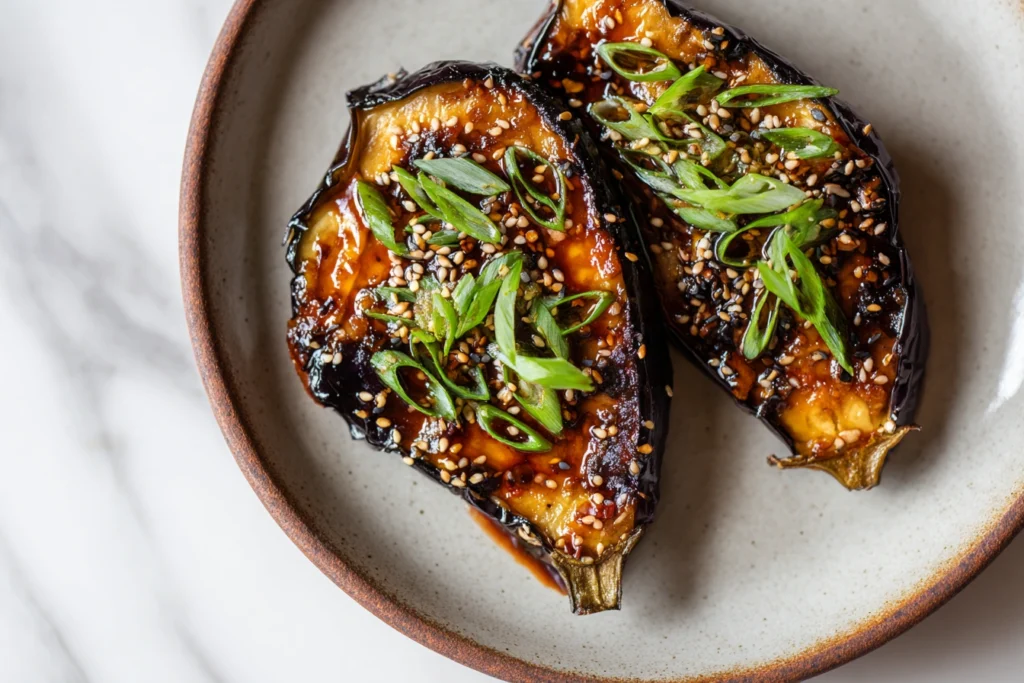
Few vegetable dishes deliver as much flavor with so little effort as Miso Glazed Eggplant. This Japanese-inspired recipe transforms simple eggplant into a rich and satisfying dish coated with a glossy miso glaze that balances sweet, salty, and savory flavors.
The beauty of Miso Glazed Eggplant lies in its simplicity. Eggplants are roasted until soft and creamy, then brushed with a sweet miso sauce that caramelizes beautifully under high heat. The result is a dish with a silky texture, deep umami flavor, and a slightly smoky aroma.
This dish is commonly served in Japanese cuisine as a small plate or side dish, but it is also hearty enough to enjoy as a light vegetarian main course. Because it requires only a few ingredients and minimal preparation time, Miso Glazed Eggplant is perfect for both everyday cooking and elegant meals.
In this article, you will learn how to prepare perfect Miso Glazed Eggplant, understand the ingredients that make it special, and discover tips that ensure a delicious result every time.
What Is Miso Glazed Eggplant?
Miso Glazed Eggplant is a dish inspired by a traditional Japanese preparation in which eggplant is cooked and topped with a flavorful miso sauce. The eggplant is typically sliced in half, scored on the surface, and roasted or grilled until tender.
Once softened, the eggplant is coated with a thick glaze made from miso paste and other seasonings. The dish is then broiled briefly so the glaze caramelizes and forms a slightly sticky surface.
The flavor profile of Miso Glazed Eggplant is a perfect balance of:
- Sweetness
- Saltiness
- Deep umami flavor
Because eggplant has a naturally creamy texture when cooked, it absorbs the glaze exceptionally well, making each bite rich and flavorful.
Why This Miso Glazed Eggplant Recipe Is So Popular
Many people love Miso Glazed Eggplant because it delivers bold flavor while remaining easy to prepare.
Rich Umami Taste
Miso paste is known for its intense savory flavor. When used in this recipe, it creates a glaze that enhances the natural sweetness of roasted eggplant.
Simple Ingredients
The ingredients required for Miso Glazed Eggplant are minimal and widely available, making the recipe accessible to home cooks everywhere.
Naturally Plant-Based
This dish is entirely vegetarian and fits well into vegan diets without requiring substitutions.
Quick Cooking Time
Most versions of Miso Glazed Eggplant can be prepared in about thirty minutes from start to finish.
Elegant Presentation
The scored surface of the eggplant absorbs the glaze and creates a beautiful pattern after roasting.
Ingredients for Miso Glazed Eggplant
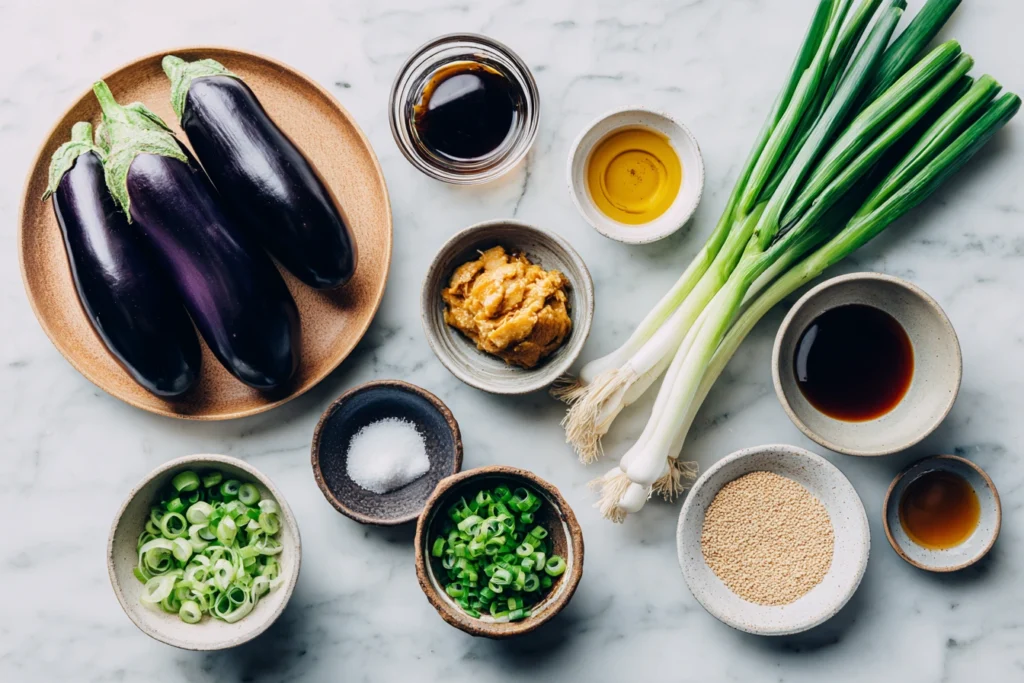
The ingredients used in Miso Glazed Eggplant are simple but carefully balanced to create the signature flavor.
Eggplant
- 3 Japanese eggplants or 2 medium eggplants
- 1 tablespoon sesame oil
- 1 teaspoon neutral cooking oil
- Sesame seeds for garnish
- 1 green onion, finely sliced
Japanese eggplants are often preferred because they have thin skin and a mild flavor.
Miso Glaze
- 3 tablespoons white miso paste
- 1 tablespoon sugar
- 1 tablespoon mirin
- ½ tablespoon sake or water
- Optional: 1 teaspoon soy sauce
This glaze is the defining element of Miso Glazed Eggplant, combining sweet and savory ingredients into a thick sauce that caramelizes during cooking.
Choosing the Best Eggplant
The quality of the eggplant plays an important role in the success of Miso Glazed Eggplant.
When selecting eggplants, look for:
- Smooth, shiny skin
- Firm texture
- No wrinkles or soft spots
Smaller eggplants are usually sweeter and contain fewer seeds. Japanese eggplants are especially suitable because they cook quickly and become very tender.
If you cannot find Japanese eggplants, regular globe eggplants can also work well in Miso Glazed Eggplant when sliced into smaller portions.
How to Make Miso Glazed Eggplant
Preparing Miso Glazed Eggplant is straightforward and requires only a few simple steps.
Step 1: Prepare the Eggplant
Preheat your oven to 220°C (425°F).
Trim the stems from the eggplants and slice them lengthwise.
Using a sharp knife, score the flesh in a crosshatch pattern without cutting through the skin. This helps the eggplant cook evenly and absorb the glaze more effectively.
Some cooks prefer to soak the eggplant halves in water for about ten minutes to remove bitterness. After soaking, dry them thoroughly before cooking.
Step 2: Prepare the Miso Glaze
In a small bowl, combine:
- miso paste
- sugar
- mirin
- sake
Mix the ingredients until they form a smooth paste.
This glaze provides the distinctive flavor of Miso Glazed Eggplant, combining sweetness with deep savory notes.

Step 3: Roast the Eggplant
Brush the cut sides of the eggplants with sesame oil.
Place them cut side down on a baking sheet lined with parchment paper.
Roast for about 15 minutes until the eggplant becomes soft and tender.
At this stage the eggplant should be slightly golden and creamy inside.
Step 4: Apply the Glaze
Remove the eggplants from the oven and turn them cut side up.
Spread a generous amount of miso glaze across each piece.
Return the tray to the oven and switch to the broiler setting. Cook for 3 to 5 minutes until the glaze begins to bubble and caramelize.
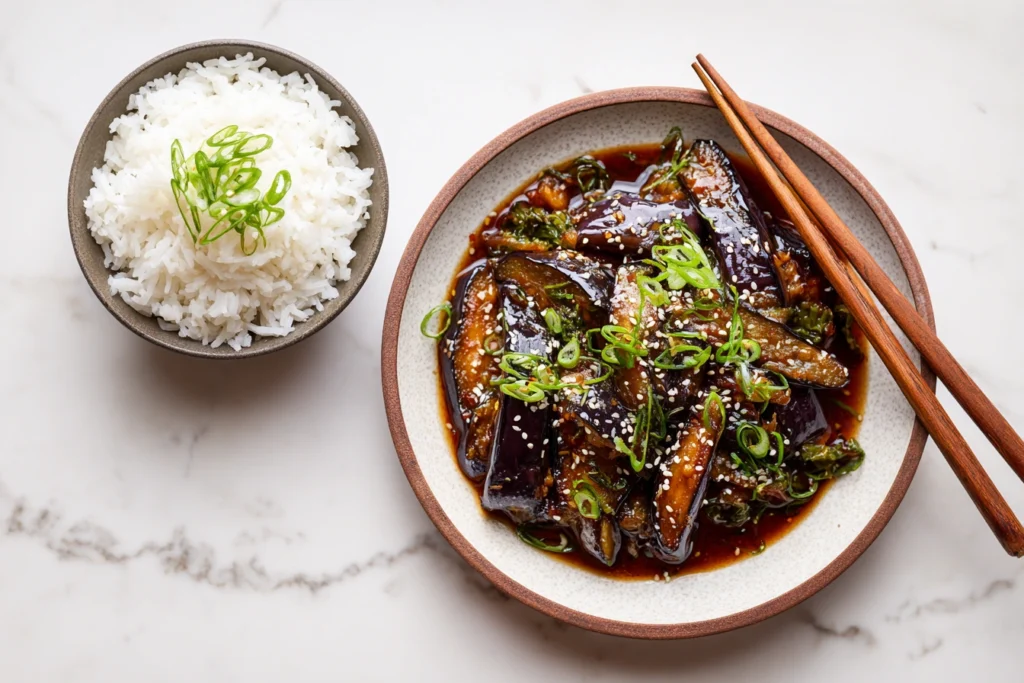
This final step gives Miso Glazed Eggplant its characteristic glossy appearance and deep flavor.
Step 5: Garnish and Serve
After broiling, remove the eggplants from the oven and garnish with sesame seeds and sliced green onions.
Serve immediately while warm so the texture remains soft and creamy.
Tips for Perfect Miso Glazed Eggplant
A few small techniques can make a big difference when preparing Miso Glazed Eggplant.
Score the Eggplant Properly
The crosshatch cuts allow the glaze to penetrate deeper into the flesh.
Use White Miso
White miso has a mild sweetness that complements the eggplant perfectly.
Don’t Overcook
Eggplant should be tender but still hold its shape.
Broil Carefully
Watch the eggplant during the broiling step to prevent the glaze from burning.
Flavor Variations
One of the great advantages of Miso Glazed Eggplant is how easily it can be customized.
Spicy Version
Add chili paste or chili flakes to the miso glaze for a touch of heat.
Garlic Miso Eggplant
Mix minced garlic into the glaze to create a stronger savory flavor.
Maple Miso Eggplant
Replace the sugar with maple syrup for a deeper sweetness.
Ginger Miso Eggplant
Fresh grated ginger adds brightness and complexity to the dish.
Serving Suggestions
Miso Glazed Eggplant pairs well with a wide range of dishes.
Some popular serving ideas include:
- Steamed rice
- Ramen noodles
- Stir-fried vegetables
- Grilled tofu
- Fresh cucumber salad
Because the glaze is rich and savory, lighter side dishes create a balanced meal.
Nutritional Benefits
Eggplant is not only delicious but also nutritious.
It contains:
- Dietary fiber
- Antioxidants
- Vitamins such as B6 and vitamin C
- Minerals including potassium
When prepared as Miso Glazed Eggplant, the dish becomes both satisfying and relatively light compared with many other comfort foods.
Storage and Reheating
If you have leftover Miso Glazed Eggplant, it can easily be stored for later.
Refrigeration
Store the eggplant in an airtight container in the refrigerator for up to three days.
Reheating
Reheat in the oven at 180°C (350°F) for about eight minutes until warmed through.
Freezing
Freezing is not recommended because the eggplant may become watery when thawed.
Frequently Asked Questions
Can I use large eggplants?
Yes. Simply cut them into thick slices or halves so they cook evenly.
Which miso is best?
White miso is usually recommended because it has a mild, slightly sweet taste.
Can this dish be grilled?
Yes. Grilling the eggplant before adding the glaze adds a delicious smoky flavor.
Is this recipe vegan?
Yes. Traditional Miso Glazed Eggplant uses plant-based ingredients.
Final Thoughts
Miso Glazed Eggplant is proof that simple ingredients can create extraordinary flavor. The creamy texture of roasted eggplant combined with a caramelized miso glaze produces a dish that feels both comforting and sophisticated.
Whether served as a side dish or a vegetarian main course, this recipe offers a delicious introduction to Japanese flavors. Once you try making Miso Glazed Eggplant, it may quickly become one of your favorite ways to prepare eggplant.
With its rich umami taste, elegant presentation, and easy preparation, Miso Glazed Eggplant is a recipe worth adding to your regular cooking rotation.
This guide draws inspiration from well-respected culinary sources

Sarah is the recipe creator behind Diamond Meals. She shares easy homemade recipes made with simple ingredients, clear instructions, and practical cooking tips. Her goal is to help home cooks prepare delicious meals, desserts, drinks, and appetizers with confidence.